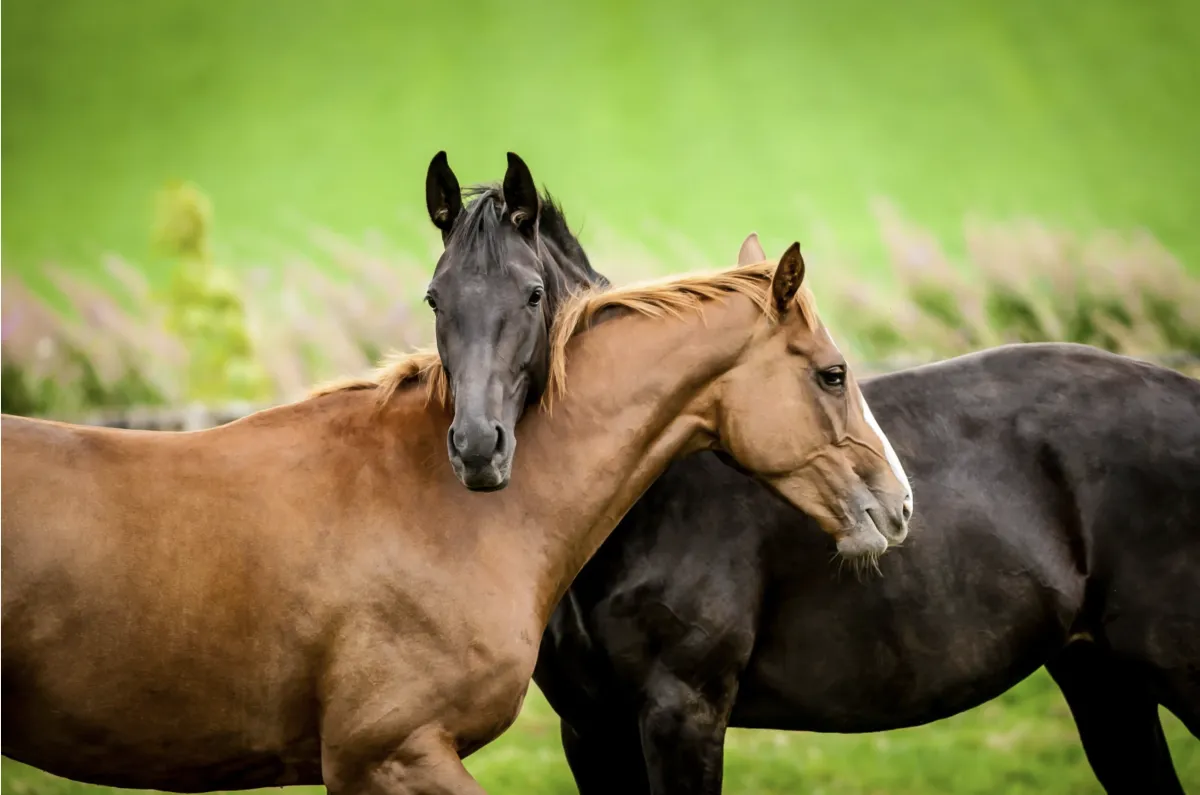
Why Horses Should Not Be Trained in Isolation: Herd Connection and Equine Learning
Why the Herd is Important
Every horse moves through distinct seasons of life. There is the season of becoming, when a young horse is developing their understanding of the world and learning how to navigate relationships, pressure, and uncertainty. There is also the season of repair, when a horse who has experienced stress, instability, or hardship rebuilds trust in their surroundings and in the humans who guide them.
These seasons require an exceptional degree of sensitivity and emotional awareness from the people responsible for the horse’s development. During these periods, the nervous system is especially impressionable. Experiences encountered during these stages often become foundational patterns that shape how the horse interprets the world moving forward.
Because of this biological sensitivity, one principle becomes particularly important.
Horses in their formative years and those moving through a season of emotional repair should not be trained in isolation.
This is not because these horses are fragile or incapable of learning independently. It is because their biology is built for connection. The equine nervous system evolved within the context of the herd. Learning, safety, and recovery all occur most effectively within that social structure.
Training alongside other horses does not dilute the learning process. In many cases it strengthens it by providing the conditions necessary for the nervous system to remain stable, curious, and receptive.
This perspective is not a critique of traditional methods. Rather, it is an invitation to align modern horsemanship with what research in behavior, neuroscience, and equine welfare continues to reveal about how horses regulate stress and process learning.
Social Buffering in Horses: The Neuroscience of Herd Regulation
One of the most important biological mechanisms underlying herd behavior in horses is known as social buffering. Social buffering refers to the way the presence of familiar companions reduces physiological stress responses in mammals. This effect has been documented across many species, including humans, primates, livestock, and horses.
In horses, social buffering occurs when the presence of a trusted herd member helps stabilize the nervous system during potentially stressful experiences. Instead of facing uncertainty alone, the horse is able to regulate emotional responses through the calming influence of nearby companions.
Studies examining equine physiology show that the presence of familiar horses can influence several key biological processes.
• reduced cortisol release during stressful events
• more stable heart rate variability
• decreased vigilance and scanning behavior
• faster recovery after exposure to stress
These physiological shifts are significant because learning requires a nervous system that is capable of curiosity and attention. When a horse experiences heightened stress, the brain shifts into defensive processing rather than exploratory learning.
In this state, the horse’s body prioritizes survival.
When a companion horse remains calm, that calmness often spreads through the herd. Horses are highly sensitive to subtle cues in posture, breathing patterns, and movement. Through this sensitivity, they are able to detect when another horse perceives safety.
This is why a steady, emotionally regulated horse often becomes a stabilizing presence for others.
In training environments, the presence of a calm companion can help maintain the conditions necessary for learning. Instead of reacting defensively to unfamiliar situations, the horse is more likely to remain attentive and curious.
For horses in formative learning stages or horses recovering from difficult experiences, this herd-based regulation becomes particularly important. The nervous system interprets the presence of familiar horses as a signal that the environment remains safe.
Within that context, the horse can remain open to new experiences rather than closing into protective responses.
Understanding social buffering helps explain why training within sight or proximity of other horses often produces calmer, more receptive behavior. It is not simply a matter of comfort. It is a biological regulation system that supports emotional stability and cognitive processing.
When trainers and facilitators recognize the role of herd-based regulation, they can design learning environments that align more closely with how the equine nervous system naturally functions.
Connection does not weaken the training process. In many cases, it is precisely what allows learning to occur safely and effectively.
What Classical Horsemanship Traditions Have Long Recognized
Long before advances in neuroscience or physiological monitoring, master horsemen observed the importance of social learning in horses.
One example is the Spanish Riding School of Vienna, one of the world's oldest classical riding institutions. For centuries, the development of Lipizzaner stallions has followed a consistent pattern rooted in herd-based living and gradual exposure to training.
Young horses raised at the Piber Stud spend several years living in large social groups where they develop
• physical coordination
• social awareness
• emotional resilience
• sensitivity to subtle communication signals
When formal training begins, young horses are rarely introduced to new lessons in complete isolation. Instead, they often work within sight or proximity of other horses, particularly calm and experienced companions.
Sensitive or uncertain horses may be paired with older horses whose steady physiology provides a model of calm behavior.
These classical practices were developed through observation rather than scientific measurement. Modern research now confirms what these horsemen intuitively understood.
A regulated horse often helps regulate the horses around them.
Learning does not occur in isolation from the social environment. It is influenced by it.
The Role of Secure Attachment in Learning and Recovery
Attachment theory is often discussed in human psychology, but the underlying biological mechanisms are present in all mammals, including horses.
Secure attachment develops when interactions are predictable, signals are consistent, and the individual experiences a reliable sense of safety within relationships.
Research conducted by Sankey and colleagues (2010, 2012) demonstrates that horses form meaningful attachments with both other horses and humans who interact with them consistently. However, attachment to humans does not replace the need for herd-based relationships.
Instead, these attachments operate together.
For horses in their early learning years, attachment provides the emotional foundation that supports exploration.
Secure attachment contributes to
• confidence in unfamiliar situations
• reduced defensive responses
• increased willingness to investigate new stimuli
• greater learning retention
For horses moving through a period of emotional repair, attachment plays a slightly different but equally important role.
It provides
• stability in uncertain environments
• reassurance during new experiences
• a reduction in protective behavioral strategies
• space for trust to gradually rebuild
When horses are trained entirely alone, the absence of familiar companions can interrupt these attachment-based regulation processes. The horse may approach the session with uncertainty or guardedness rather than curiosity.
In many cases, behaviors later labeled as resistance are actually expressions of emotional protection.
Considerations for Equine Assisted Learning and Therapy
These principles become especially important in equine-assisted learning and therapeutic environments.
When a single horse stands alone with a human participant who is processing strong emotions, the horse may be asked to absorb and respond to significant emotional activation without the support of a herd structure.
Research on emotional contagion in horses has demonstrated that horses rapidly respond to human stress signals through physiological changes. Heart rate patterns, muscle tension, and vigilance can shift when horses are exposed to human emotional activation.
Without access to other horses that help regulate the environment, that activation may accumulate in the horse’s system.
Possible consequences include
• elevated stress responses
• reduced recovery between sessions
• increased behavioral tension
• emotional fatigue
For horses in their developmental stages, repeated exposure to emotionally intense environments without herd support can challenge their still-developing regulatory capacity.
For horses already in the midst of a healing process, it may unintentionally recreate patterns of overwhelm or instability.
When horses have access to herd members before, during, or after therapeutic sessions, their nervous systems have an opportunity to recalibrate.
The herd becomes a place where accumulated tension can dissipate and equilibrium can return.
Learning and Recovery Are Social Processes
Research on social learning in horses demonstrates that observation plays an important role in how horses acquire new behaviors.
Studies by Hausberger and colleagues (2004) show that horses frequently learn by observing the responses of other horses in their environment. Calm behavior modeled by one horse can influence the reactions of another.
When horses learn within a social context
• tension often resolves more quickly
• curiosity remains active for longer periods
• defensive responses decrease
• learning retention improves
• trust toward humans develops more naturally
A calm companion communicates safety in a way that human cues alone cannot fully replicate.
Within the herd environment, learning tends to follow a natural progression.
Safety allows the body to remain open.
Openness supports curiosity.
Curiosity supports learning.
Learning strengthens connections.
This progression forms the foundation of a genuine partnership between horse and human.
A More Aligned Way Forward
As our understanding of equine cognition, physiology, and emotional development continues to grow, horsemanship practices have an opportunity to evolve alongside that knowledge.
Horses who are still forming their emotional foundation, and those who are restoring it, benefit profoundly from learning environments rooted in connection rather than isolation.
This understanding does not invalidate previous training traditions. Instead, it reflects a growing awareness of how horses naturally regulate stress and acquire new information.
Connection is not simply a sentimental concept. It is a biological necessity for a species whose survival has always depended on the stability of the herd.
When that reality is honored, training environments change.
Learning becomes safer.
Trust develops more easily.
Emotional resilience grows.
If our goal is to develop horses who are
• confident
• emotionally flexible
• trusting in partnership
• capable of healing from past experiences
• prepared to express their full potential
Then the conditions in which we teach them must reflect the way their nervous systems are designed to function.
Horses consistently demonstrate that learning flourishes when a sense of belonging remains intact.
Within that environment, possibility expands.
Final Thoughts
When we step back and look honestly at how horses develop, learn, and recover from difficult experiences, one pattern becomes impossible to ignore. Horses are not designed to navigate the world alone. Their biology, their behavior, and their emotional resilience are all built around connection with other horses.
The herd is not simply a social preference. It is the framework through which a horse interprets safety, regulates stress, and builds confidence in unfamiliar situations. Within that structure, young horses learn to respond to pressure, read subtle signals, and remain balanced as the environment changes. Horses that are healing from difficult experiences rely on that same structure to rebuild stability and trust.
When we remove a horse from that relational context during sensitive stages of development or recovery, we often ask the nervous system to perform under conditions that naturally increase vigilance and tension. The horse may appear distracted or resistant, but the response is often due to biological stress rather than an unwillingness to learn.
When the connection is preserved, the learning environment changes. A calm companion can stabilize the emotional atmosphere of a training session in ways no human cue can fully replicate. The presence of the herd communicates safety at a physiological level, allowing curiosity, relaxation, and openness to emerge. From that place, learning becomes more efficient, trust develops more naturally, and the partnership between horse and human deepens.
As horsemanship continues to evolve, our responsibility is not simply to train horses effectively but to understand the conditions that allow them to thrive. When we recognize the role of connection in emotional development and recovery, we begin to align our practices with the biological reality of the animal before us.
Horses have always known the importance of belonging. When we honor that truth, we create learning environments where both horse and human can grow with greater stability, clarity, and respect.
Join the Conversation
Thank you for taking the time to read this post! I'd love to hear your thoughts, questions, or experiences. Feel free to share them in the comments below. If you found this blog helpful, please share it with fellow equestrians who might benefit from these insights. Together, we can build a more compassionate and connected equine community! 🐴✨
Connect
If you're inspired to 𝗱𝗲𝗲𝗽𝗲𝗻 𝘆𝗼𝘂𝗿 𝗰𝗼𝗻𝗻𝗲𝗰𝘁𝗶𝗼𝗻 with your horse and explore more tools for harmony and growth, click here to join our FREE Equine Wisdom Institute community on Skool! It's a supportive space for 𝗹𝗶𝗸𝗲-𝗺𝗶𝗻𝗱𝗲𝗱 𝗲𝗾𝘂𝗲𝘀𝘁𝗿𝗶𝗮𝗻𝘀 𝘁𝗼 𝘀𝗵𝗮𝗿𝗲, 𝗹𝗲𝗮𝗿𝗻, 𝗮𝗻𝗱 𝗴𝗿𝗼𝘄 𝘁𝗼𝗴𝗲𝘁𝗵𝗲𝗿 on this incredible journey with our equine partners.
Join our list!
Click here to be notified of new blogs, trainings, and upcoming events.
References & Additional Resources
Supporting Research on Herd Behavior, Social Learning, and Stress Regulation in Horses
Scientific research in equine behavior and physiology consistently shows that horses rely on social connections to regulate stress, process learning, and maintain emotional stability. The following studies and foundational texts provide insight into how herd dynamics influence equine cognition, learning, and well-being.
Schmidt, A., Möstl, E., Wehnert, C., Aurich, J., Müller, J., & Aurich, C. (2010).
Cortisol release and heart rate variability in horses during different kinds of exercise.Journal of Equine Veterinary Science, 30(9), 452–458.
This study examined physiological stress markers in horses and demonstrated that cortisol levels and heart rate variability shift significantly in response to environmental stressors. Findings highlight how social context and familiarity influence stress regulation in horses.
Keeling, L. J., Jonare, L., & Lanneborn, L. (2009).
Investigating horse–human interactions: The effect of a nervous human.Veterinary Journal, 181(1), 70–71.
This research demonstrated that horses quickly synchronize their physiological stress responses with humans, reinforcing the importance of calm and emotionally stable environments when working with horses.
Hausberger, M., Roche, H., Henry, S., & Visser, E. K. (2008).
A review of the human–horse relationship.Applied Animal Behaviour Science, 109(1), 1–24.
This comprehensive review explores how social environments influence equine behavior, stress responses, and learning ability. The research highlights the importance of stable herd structures for emotional regulation and welfare.
Hausberger, M., & McDonnell, S. M. (2013).
Behavioral and physiological responses of horses in training: The influence of environmental and social conditions.Journal of Veterinary Behavior, 8(6), 433–441.
This study demonstrated that horses trained within stable social environments exhibit lower stress responses and improved behavioral outcomes compared to horses trained under socially restrictive conditions.
Sankey, C., Richard-Yris, M. A., Henry, S., Fureix, C., Nassur, F., & Hausberger, M. (2010).
Reinforcement as a mediator of the human–horse relationship: Training with positive reinforcement improves learning and human–horse interactions.Applied Animal Behaviour Science, 123(1–2), 52–59.
Findings from this study indicate that horses develop stronger trust and learning outcomes when training environments support emotional safety and consistent relational interactions.
Sankey, C., Richard-Yris, M. A., Henry, S., Fureix, C., & Hausberger, M. (2012).
Do horses have a concept of person? Recognition of handlers by skill level.Animal Cognition, 13(1), 299–306.
This research demonstrates that horses recognize individual humans and adjust their behavior based on previous interactions, indicating the importance of relational stability in training and learning environments.
McDonnell, S. M. (2003).
The Equid Ethogram: A Practical Field Guide to Horse Behavior.Eclipse Press.
This foundational work documents natural equine social behavior, illustrating how herd structures provide emotional regulation, communication cues, and behavioral stability for horses in natural environments.
Dalla Costa, E., Minero, M., Lebelt, D., Stucke, D., Canali, E., & Leach, M. C. (2014).
Remote heart rate assessment validation: A new tool for measuring emotional states in horses.Veterinary Behaviour, 9(1), 22–27.
This research validated methods for measuring equine emotional states through heart rate monitoring, supporting the understanding that horses physiologically respond to emotional environments.


